Tumor necrosis factor alpha (TNF alpha), also known as lymphotoxin and cachectin, is a pleiotropic cytokine. TNF alpha is a smaller cytokine with a molecular weight of 26 kDa (transmembrane) and 17 kDa (soluble) that binds to the same receptors producing a vast array of effects similar to those of TNF-beta. Both TNF-alpha and TNF-beta share 30% amino acid homology and have similar biological activities. TNF-alpha is produced primarily by monocytes, neutrophils and macrophages. It is found in synovial cells and macrophages in the tissues. TNF-alpha and TNF-beta can modulate many immune and inflammatory functions, while having the ability to inhibit tumor growth. Target tumor cells must express TNF receptors 1 (55 kDa) and 2 (75 kDa) to be killed, with the p55 receptor mediating the cytotoxic response.
Product Features
Additional Notes
Strip plates and additional reagents allow for use in multiple experiments
Quantitative protein detection
Establishes normal range
The best products for confirmation of antibody array data
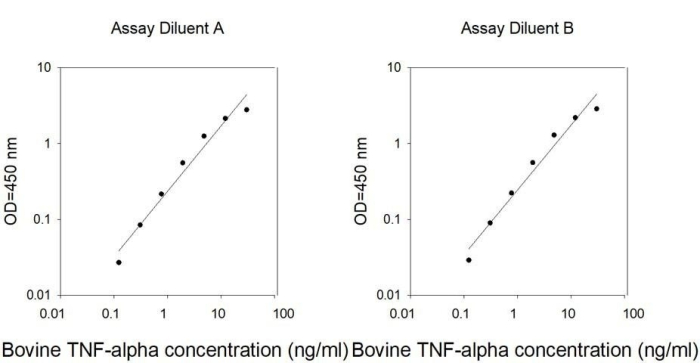
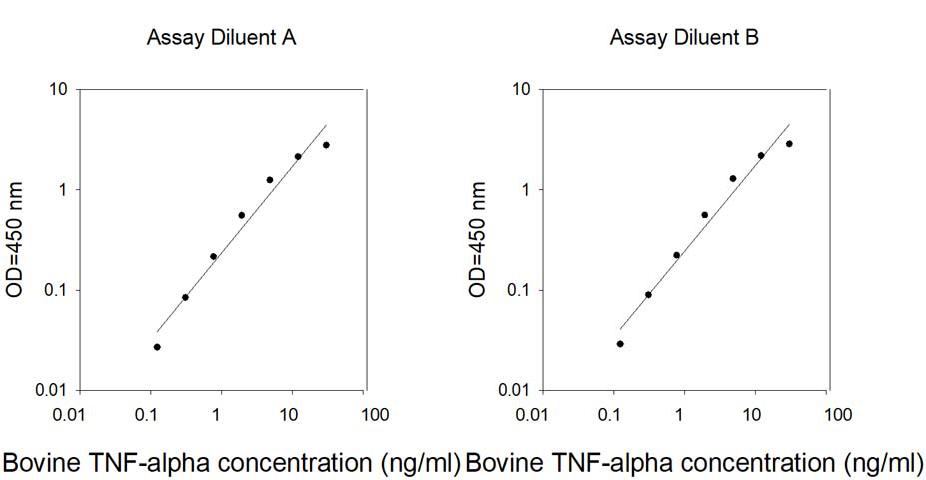
Standard Curves
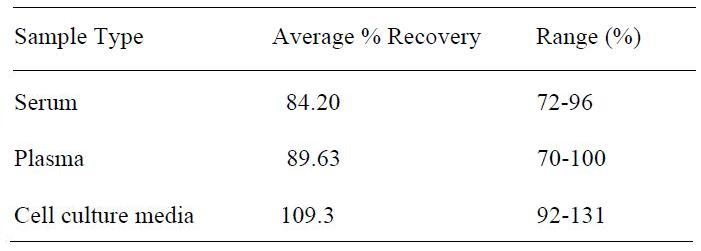
Spiking & Recovery Results
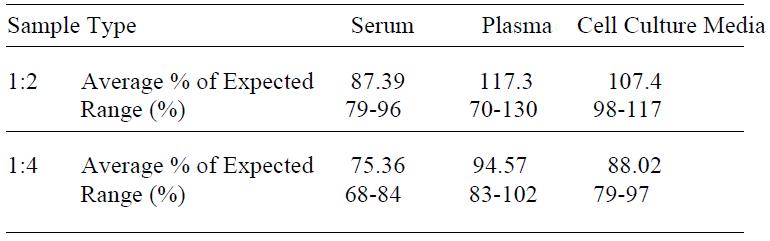
Linearity Results
Application Notes
Kit Components
Pre-Coated 96-well Strip Microplate
Wash Buffer
Stop Solution
Assay Diluent(s)
Lyophilized Standard
Biotinylated Detection Antibody
Streptavidin-Conjugated HRP
TMB One-Step Substrate
Other Materials Required
Distilled or deionized water
Precision pipettes to deliver 2 µl to 1 µl volumes
Adjustable 1-25 µl pipettes for reagent preparation
100 µl and 1 liter graduated cylinders
Tubes to prepare standard and sample dilutions
Absorbent paper
Microplate reader capable of measuring absorbance at 450nm
Log-log graph paper or computer and software for ELISA data analysis
Protocol Outline
Prepare all reagents, samples and standards as instructed in the manual.
Add 100 µl of standard or sample to each well.
Incubate 2.5 h at RT or O/N at 4°C.
Add 100 µl of prepared biotin antibody to each well.
Incubate 1 h at RT.
Add 100 µl of prepared Streptavidin solution to each well.
Incubate 45 min at RT.
Add 100 µl of TMB One-Step Substrate Reagent to each well.
The entire kit may be stored at -20°C for up to 1 year from the date of shipment. Avoid repeated freeze-thaw cycles. The kit may be stored at 4°C for up to 6 months. For extended storage, it is recommended to store at -80°C.
Li J., Hu L., Liu Y., et al. DDX19A Senses Viral RNA and Mediates NLRP3-Dependent Inflammasome Activation. J Immunol. 2015 Dec 15;195(12):5732-49. doi: 10.4049/jimmunol.1501606
Species:
Porcine
Sample Type:
Conditioned Media (Primary pulmonary alveolar macrophages infected with porcine reproductive respt virus)
Brandao A., Cooke R., Corra F., et al. Physiologic, health, and production responses of dairy cows supplemented with an immunomodulatory feed ingredient during the transition period. J Dairy Sci. 2016 Jul;99(7):5562-72. doi: 10.3168/jds.2015-10621
Rodrigues M., Cooke R., Marques R., et al. Effects of vaccination against respiratory pathogens on feed intake, metabolic, and inflammatory responses in beef heifers. J Anim Sci. 2015 Sep;93(9):4443-52. doi: 10.2527/jas.2015-9277.
Species:
Bovine
Sample Type:
Serum (respiratory vaccine studies in beef heifers)
Rodrigues M., Cooke R., Marques R., et al. Effects of oral meloxicam administration to beef cattle receiving lipopolysaccharide administration or vaccination against respiratory pathogens. J Anim Sci. 2015 Oct;93(10):5018-27. doi: 10.2527/jas.2015-9424.